- 5groups
- 4dulce variants
- 6 minread
The world of Argentine gelato
What Argentinian Ice Cream Is: Helado, Gelato and Dulce de Leche
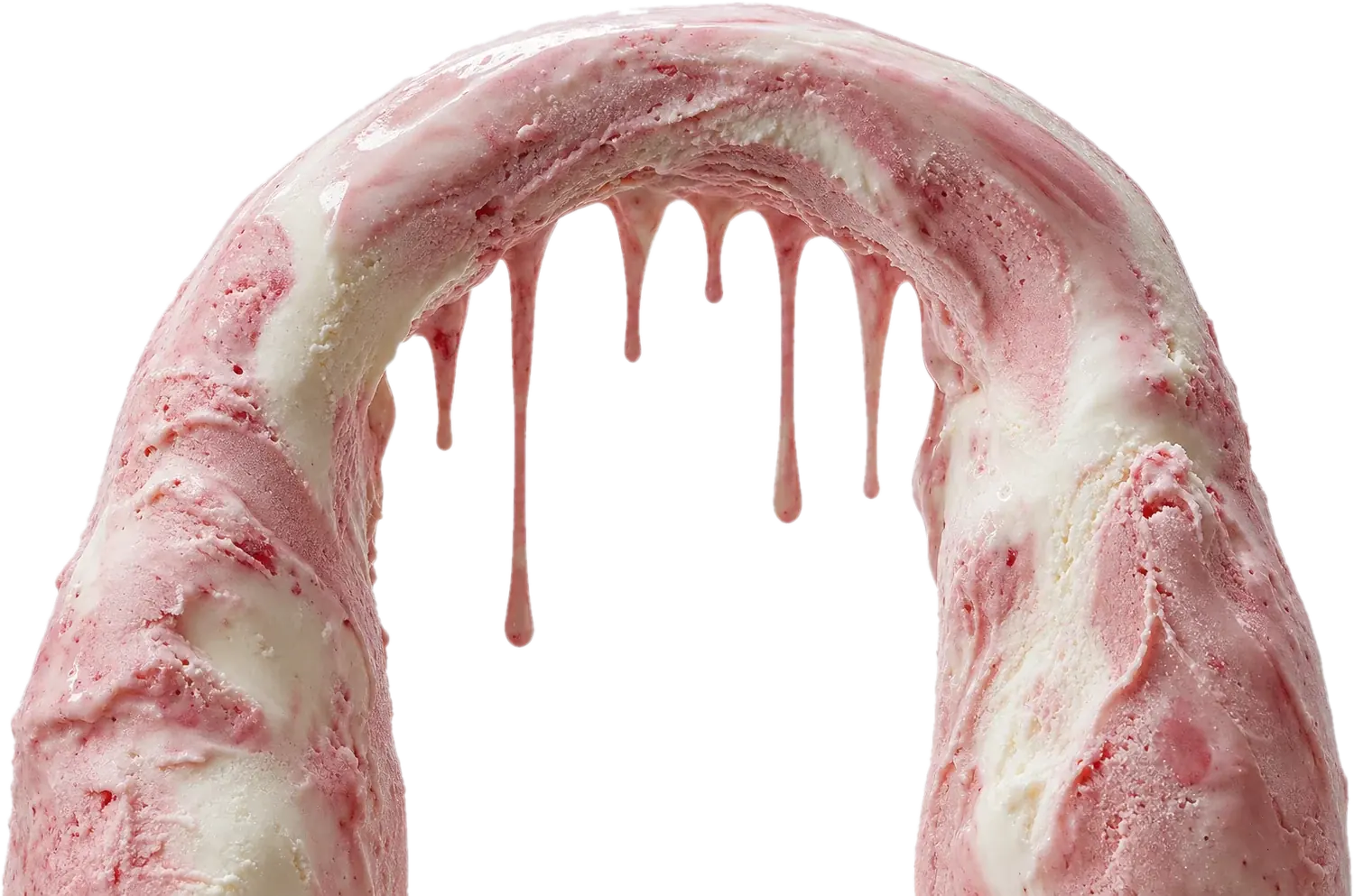
Argentina took an Italian craft, kept the technique, and rebuilt the flavour repertoire around its own pantry. The result is not a regional variation. It is its own thing.
How argentinian ice cream became its own thing
One migration, one pantry, and a hundred years.
- 01
Imported intact
Italian migration carried the whole craft: slow churn, low air, warmer counter.
- 02
Rebuilt around a pantry
Egg yolk, sweet wine and caramelised milk replaced the Italian repertoire.
- 03
Calibrated to one ingredient
Once dulce de leche is central, every other flavour is built to sit beside it.

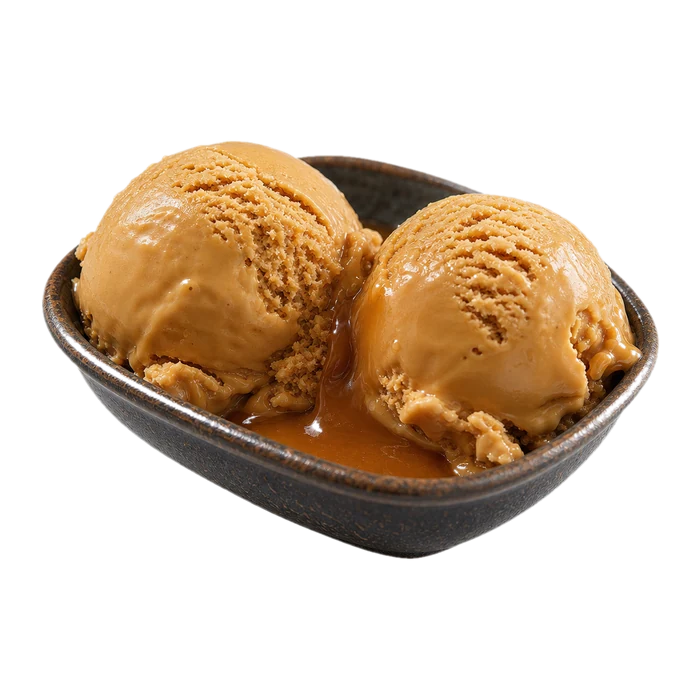
Dulce de leche is not a flavour. It is a family.
About this site:FREGGO is an independent guide to ice cream culture. It covers Argentine gelato, the flavours worth knowing and the technique behind them, and everything on it is editorial.
Argentinian ice cream is the direct descendant of Italian gelato, and the reason is demographic rather than culinary: Italian migration to Argentina was large enough and sustained enough to carry a whole craft with it, including the slow churn, the warmer serving temperature and the low air content. None of that was reinvented in Buenos Aires. It was imported intact.
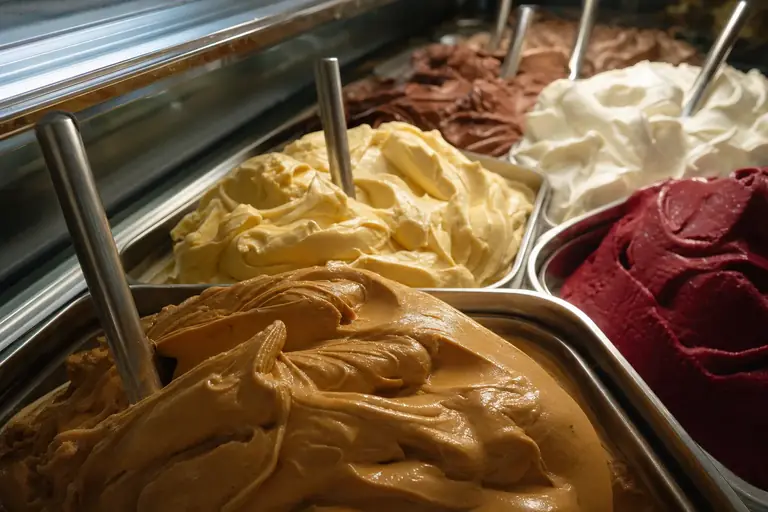
What changed was everything around the technique. The pantry was different, the dairy was different, and the sweet tooth was different, so within a generation the boards no longer looked Italian. Argentinian ice cream kept the method and replaced the repertoire, which is why a Buenos Aires cabinet can be immediately recognisable to anyone who has stood in front of one and completely unfamiliar to anyone who has not.
Helado, gelato and where the two part ways
Helado is simply the Spanish word for argentinian ice cream, and helado artesanal is the term that matters: made on the premises, in small batches, from a base mixed that day. Technically it is gelato. In practice three things separate a good Argentine cabinet from a good Italian one.
The first is portion. Argentine servings run larger, and a cup is moulded into a peak with a spade rather than levelled off, which is why the shape is the first thing a visitor notices. The second is the yolk. Egg-yolk bases are far more common, which makes the texture heavier and the colour deeper. The third is the board itself: twenty to thirty flavours, grouped rather than listed, is normal rather than ambitious.
Dulce de leche, the ingredient that runs through everything
Dulce de leche is not one flavour on an Argentine board. It is a component that appears in several, and the versions are not interchangeable: a plain dulce de leche, a granizado shot through with chocolate shards, one with a salted edge, and often a super or extra version made with a darker, longer-cooked batch. A cabinet with only one is either small or not paying attention.
It matters because it sets the sweetness level for the whole board. Once one ingredient that sweet is central, everything else is built to sit beside it, which is why Argentine fruit sorbets tend to be sharper than their Italian equivalents. The ingredient has its own page: what dulce de leche is and how it is made.
How the flavours are grouped
Five groups do most of the work. Chocolates run from milk through bitter and usually include an amargo. Cremas are the yolk and dairy family, including sambayon and the crema del cielo style. Frutales are fruit, split between dairy bases and water sorbets. Dulce de leche is its own group, as above. And the nut and biscuit flavours sit slightly apart, since they carry fat rather than acid.
Reading the groups is more useful than reading the names, because the grouping tells you what the kitchen thinks it is doing. A board where the frutales are all dairy has decided that texture beats brightness. A board with four cremas and one fruit is telling you where its confidence is. The unusual end of the same spectrum is on the unusual flavours page.

An Argentine board, group by group
mildadventurous
What each group is for, and the entry that tells you most about the kitchen.

Dulce de leche
4 flavours
Not a flavour. A family.
- Dulce de leche clasico
- Granizado
- Con sal
- Super or extra

Cremas
4 flavours
Egg yolk and dairy. Where Argentine helado is heaviest.
- Sambayon
- Crema del cielo
- Tramontana
- Crema americana

Chocolates and frutales
4 flavours
The two ends of the board.
- Chocolate amargo
- Chocolate suizo
- Frutilla al agua
- Limon
Questions about Argentinian ice cream
What visitors ask in front of an Argentine cabinet.
Is Argentinian ice cream the same as gelato?
Technically it is gelato, since the method came with Italian migration and was kept intact: slow churn, low air, warmer serving. What differs is the repertoire, the portion and the frequency of egg-yolk bases, which together make an Argentine cabinet immediately distinguishable from an Italian one.
What does helado artesanal mean?
Made on the premises in small batches from a base mixed that day, as opposed to a bought-in industrial base. It is the phrase worth looking for, and it says more about what is in the cabinet than any flavour name on the board does.
Why is dulce de leche on the board four times?
Because the versions are genuinely different products: plain, chocolate-shot, salted, and a darker longer-cooked batch. They also set the sweetness level for everything else, which is why Argentine fruit sorbets are usually sharper than Italian ones.
What is sambayon?
A crema built on egg yolk and sweet wine, related to Italian zabaione. It is dense, pale gold, faintly alcoholic in aroma rather than taste, and it is on almost every board in Buenos Aires and almost none in Britain.
Where can Argentinian ice cream be found in London?
Read the board rather than the sign. The signals worth looking for are cups moulded to a peak, a spade rather than a round scoop, more than one dulce de leche, and the words helado artesanal.