- 6cities
- 16flavours mapped
- 6 minread
What makes it its own thing
Argentine Helado: What Makes It Unique, and Every Flavour Group
Slow churn, low air, a warmer counter and a peak moulded with a spade. Then a board that no Italian gelateria would recognise, built around one ingredient that behaves like a pantry staple.
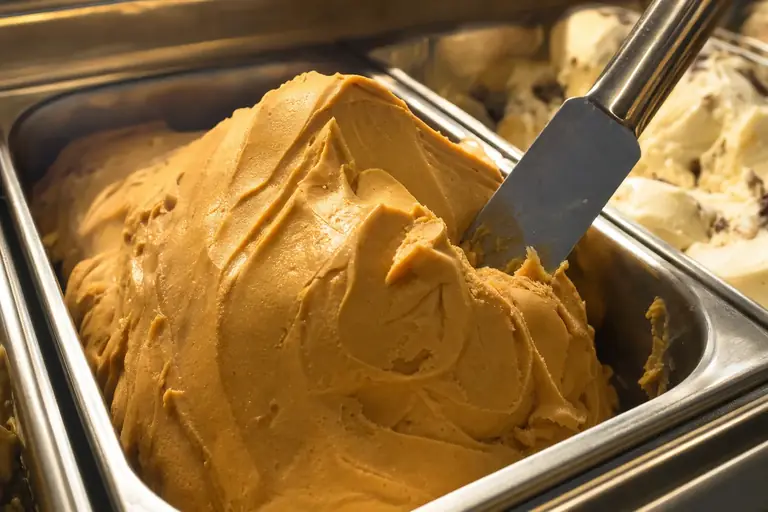
Four things that make helado its own thing
None of them is a recipe. All four are choices about process and service.
- 01
Slow churn
Less air folds in, so the density rises and a small cup goes further than its size.
- 02
Warmer counter
Too warm to ball, so it is worked with a spade and pressed up into a peak.
- 03
Yolk and caramel
Egg-yolk cremas give the weight; dulce de leche sets the sweetness for everything else.
The technique was imported. The board was not.
The one-line test:look at the tool and the shape. A flat spade and a peaked cup means the technique is right, whatever the sign says.
Argentine helado is Italian gelato by descent, carried across the Atlantic by a migration large enough to bring a whole craft with it. The technique arrived intact and was never reinvented. What changed was everything around it, and the changes are specific enough to list.
One: the air, and therefore the density
Helado artesanal is churned slowly, which folds in far less air than an industrial process does. That is the single decision the rest follows from. A denser scoop puts more dairy and more flavouring on the spoon, so a small cup goes further than its size suggests, and the same recipe tastes stronger because there is more of it per mouthful.
Two: the temperature, and therefore the shape
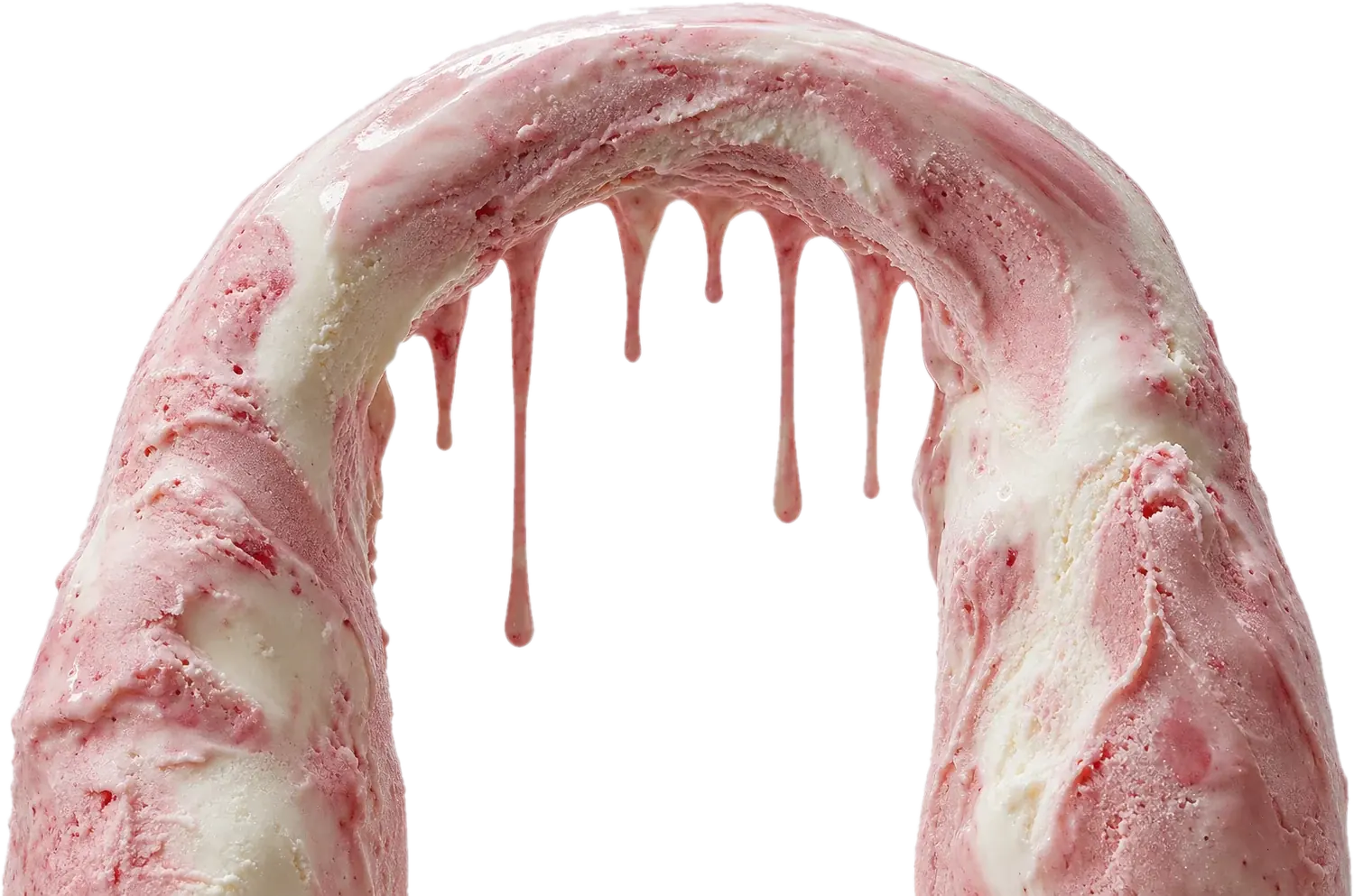
It is held a few degrees warmer than hard-scooped ice cream. At that temperature you cannot form a ball, so it is worked with a flat spade and pressed upward into a peak, which is why an Argentine cup has a silhouette rather than a dome. The warmth also releases aromatics that stay locked in a colder scoop, which is the biggest single reason it tastes more intense.
Three: the egg yolk
Yolk-based cremas are far more common than in Italy, and they are what gives the board its weight. Sambayon, built on yolk and sweet wine, is close to universal; crema del cielo and tramontana sit in the same family. A cabinet without a yolk-led crema is either very modern or not Argentine.
Four: dulce de leche is not a flavour
It is a component that appears several times, in versions that are not interchangeable, and it sets the sweetness level for the entire board. Once something that sweet is central, the fruit sorbets have to be built sharper to sit beside it, which is why Argentine frutales run more acidic than Italian ones. The ingredient has its own page: what dulce de leche is and how it is made.

Where the tradition is strongest
Helado is national, but it is not evenly distributed, and the regional differences are real rather than folkloric. Six places do most of the work, and each one bends the board in its own direction.
- Buenos AiresThe reference point. Palermo, Recoleta and Belgrano carry the highest density of artesanal counters, and the house styles there are what the rest of the country is measured against.
- RosarioA serious second city with its own house styles, and boards that lean harder on chocolate than the capital does.
- CórdobaInland and hot, which pushes the repertoire toward the sweeter end and toward more dulce de leche variants than anywhere else.
- MendozaWine country, which is exactly why sambayón is taken seriously here rather than treated as a legacy flavour.
- Mar del PlataA coastal summer trade. When the season is three months long the board swings to fruit and to water sorbets.
- BarilocheAndean chocolate town, and chocolate-led boards to match, including bitter versions that would be a hard sell further north.
The board, group by group
Sixteen entries that between them cover almost any Argentine cabinet. The colour is roughly what the scoop looks like, which is a more useful signal than the name.
| Flavour | What it is doing | Group |
|---|---|---|
| Dulce de leche | The baseline. Flat here and nothing else on the board will save it. | Dulce |
| Granizado | The same base shot through with fine chocolate shards, for texture rather than taste. | Dulce |
| Dulce con sal | A salted edge, which stops the sweetness closing the palate down. | Dulce |
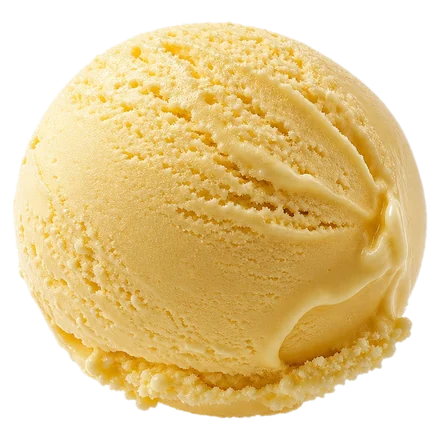
| Sambayón | Egg yolk and sweet wine. Dense, pale gold, and close to universal. | Crema |
| Crema del cielo | Vanilla-adjacent with a caramel thread running through it. | Crema |
| Tramontana | Cream with meringue and biscuit pieces. Texture is the whole point. | Crema |
| Chocolate amargo | Bitter, and the counterweight the dulce de leche group needs. | Chocolate |
| Chocolate suizo | Milk chocolate with almond or nut pieces through it. | Chocolate |
| Frutilla al agua | Strawberry as a water sorbet, and sharper than the Italian version. | Frutal |
| Limón | The palate reset. A sweet board needs one and this is it. | Frutal |
| Banana split | Banana with chocolate and nut. Sweeter than it sounds, which is saying something. | Frutal |
| Frambuesa | Raspberry, usually as a sorbet, carrying the acid the cremas cannot. | Frutal |
| Menta granizada | Mint with chocolate shards. The one flavour that reads the same everywhere. | Frutal |
| Pistacho | Dull sage if it is real. Bright green means colour rather than nuts. | Nuez |
| Café | Bitterness from a second direction, and it sits beside chocolate rather than with it. | Nuez |
| Coco | Fat and fibre together, which is why it holds its texture longer than most. | Nuez |
Questions about Argentine helado
Asked in front of a cabinet, usually while the queue builds.
What actually makes Argentine helado different from Italian gelato?
The technique is the same, so the difference is repertoire and service: yolk-based cremas are far more common, dulce de leche appears several times rather than once, portions run larger, and the cup is moulded into a peak with a spade rather than levelled off.
Is helado the same thing as gelato?
Helado is simply the Spanish word for ice cream, so on its own it says nothing about method. The phrase that matters is helado artesanal, which means made on the premises in small batches from a base mixed that day rather than from a bought-in industrial mix.
Which city has the best helado in Argentina?
Buenos Aires has the highest density and sets the reference, but density is not quality. Rosario, Cordoba and Mendoza all have their own house styles, and Bariloche runs chocolate-led boards that the capital would not attempt. This site keeps no ranking of shops.
Why is there more than one dulce de leche on the board?
Because they are different products rather than different labels: a plain base, one shot through with chocolate shards, one with a salted edge, and often a darker longer-cooked batch. A cabinet with only one is either small or not paying attention.
What is sambayon and is it alcoholic?
A crema built on egg yolk and sweet wine, related to Italian zabaione. The alcohol is there in aroma rather than in effect, since most of it cooks off, and what is left is a dense pale-gold scoop that tastes faintly of marsala.