- 4mechanisms
- 6°Capart
- 6 minread
The one everybody asks
Gelato vs Ice Cream: Every Real Difference in Air, Density and Texture
It is not a marketing distinction. The two are made at different speeds, held at different temperatures, and carry very different amounts of air, and every difference you can taste follows from that.
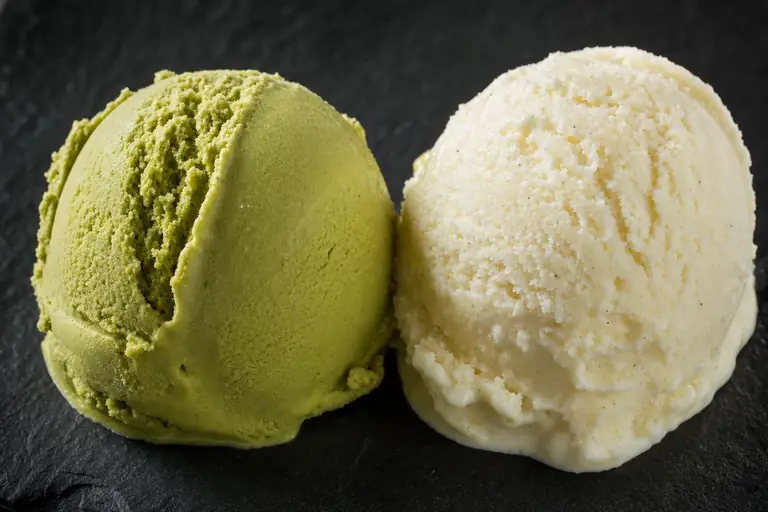
The difference between gelato and ice cream, in one table
Four mechanisms, and everything else is downstream of them.
- 01
Less air
Gelato carries a fifth to a third of its volume in air; ice cream can carry half or more.
- 02
Less fat
More milk, less cream, which lowers the fat and lets the flavour through.
- 03
Warmer service
Six degrees warmer, so the aromatics are released rather than locked in.
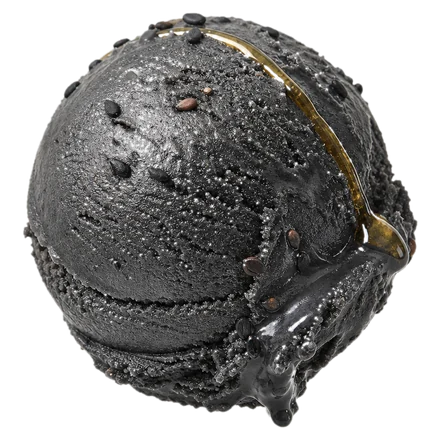
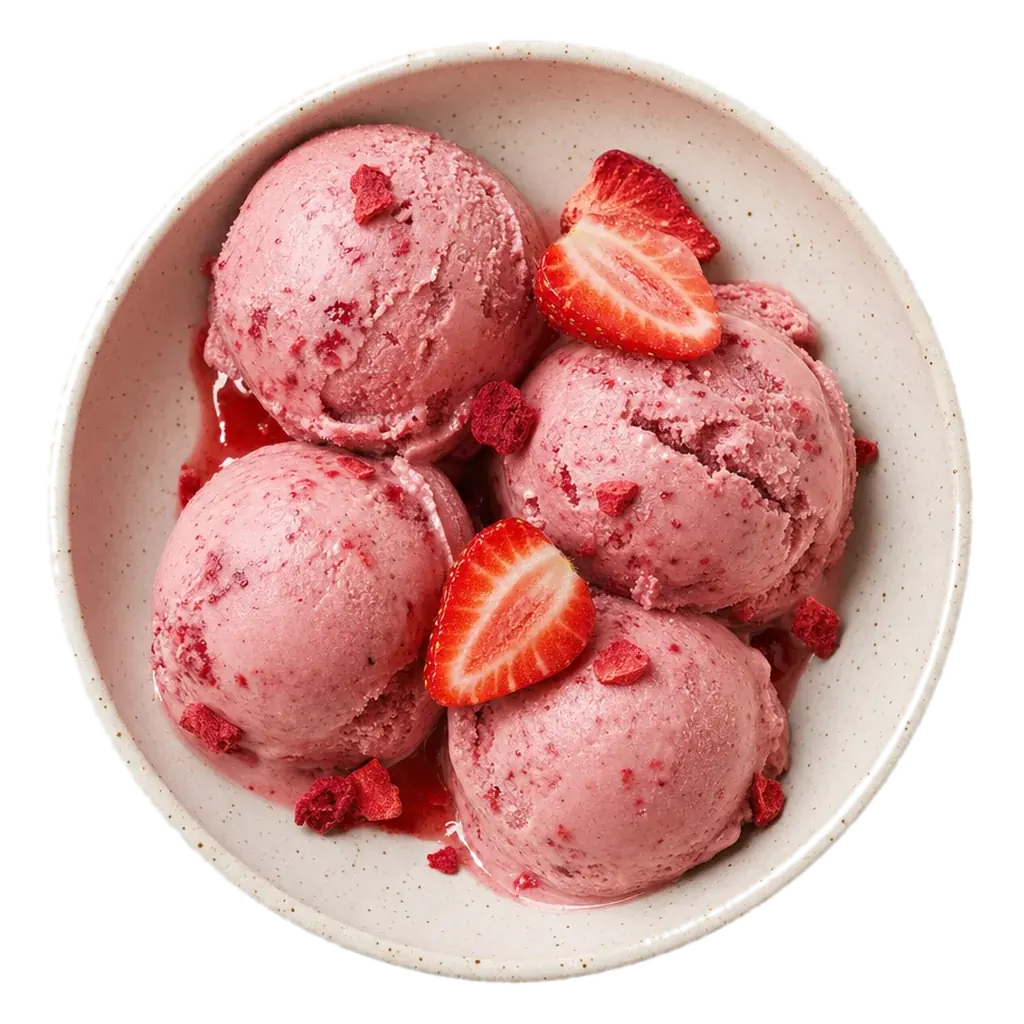
Air is the cheapest ingredient in the freezer.
Where sorbet sits:sorbet is water, sugar and fruit with no dairy at all, so it freezes harder and melts thinner. Frozen yoghurt swaps some dairy for cultured yoghurt, and the acid is why it tastes lighter than its sugar content suggests.
Gelato vs ice cream is the question this whole page exists for. The difference between gelato and ice cream is not a question of quality, and it is not a question of nationality either. Both are frozen sweetened dairy. What separates them is a set of process choices, and the useful thing about process choices is that you can taste every one of them.
| Gelato | Ice cream | |
|---|---|---|
| Air (overrun) | Roughly 20 to 35 per cent of volume | Often 50 per cent and legally up to 100 |
| Fat | Lower: more milk, less cream | Higher: cream-led |
| Serving temperature | Warmer, around minus 12 degrees | Colder, around minus 18 degrees |
| Churn speed | Slow | Fast |
| Served with | A flat spade | A round scoop |
| On the palate | Dense, cold for less time, flavour forward | Lighter, colder for longer, flavour muted |
Air is the whole story: overrun and density
The difference between gelato and ice cream starts here. Overrun is the trade word for how much air has been beaten into a frozen base, expressed as a percentage of the original volume. At 100 per cent overrun a litre of base has become two litres of product, and half of what is being sold is air. Gelato is churned slowly and specifically to avoid that, which is why it lands somewhere between a fifth and a third.
Density follows directly. A dense scoop puts more actual dairy and more actual flavouring on the spoon, which is why a small gelato cup satisfies where a larger airy scoop does not. It is also why gelato is heavier in the hand, and why the same weight costs more to make. Air is the cheapest ingredient in the freezer, and every economic pressure in the industry pushes toward more of it, which the British industry page traces.
What that does to the texture
Everything a gelato vs ice cream comparison turns up comes back to those two numbers, the air and the fat, and to the six degrees between the counters.
Two things at once. Less air means fewer and smaller air cells, so the texture reads as smooth and close rather than light and open. And less fat means less coating on the tongue, which sounds like a loss and is not: fat is also what mutes flavour, so a lower-fat, denser base tastes stronger for the same recipe.
Serving temperature finishes the job. At minus 18 degrees the tongue is partly numbed and volatile aromatics stay locked in the solid. At minus 12 the same base releases them, which is the single biggest reason gelato tastes more intense than an ice cream made from an identical mix. It is also why gelato melts faster and has to be eaten without pausing.
Gelato vs ice cream at the counter
In a gelato vs ice cream comparison at an actual counter, the tells are physical rather than written. A flat spade means a warmer, denser product, because you cannot form a ball out of gelato at serving temperature. A round scoop means colder and harder. A cup moulded into a peak is continental technique; a levelled cup with a domed top is not.
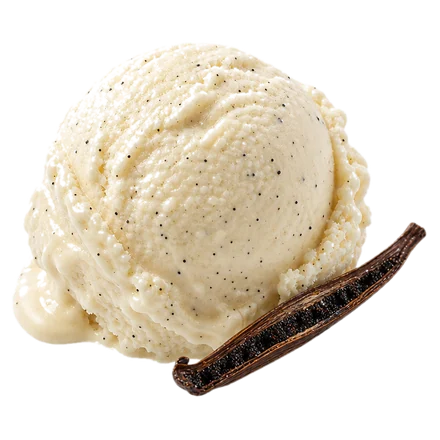
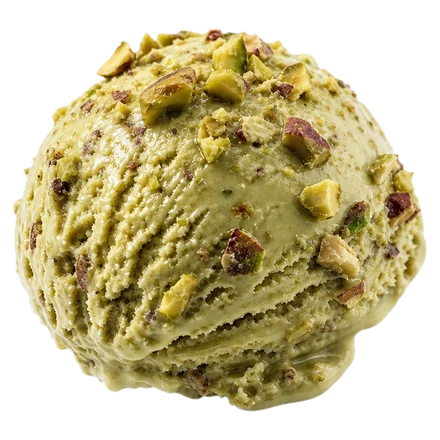
Colour is the second tell, and it points the other way from instinct. Bright, even colour usually means a bought-in industrial base or added colour. Real pistachio is a dull sage, real strawberry is a muted dusty pink, and real vanilla is off-white with visible seed. The pistachio page uses that one flavour as the whole test.

Four questions that settle it
mildadventurous
Ask these in front of any cabinet and the label stops mattering.
Look at the tool
Serving equipment is the least deniable signal.
- Flat spade
- Round scoop
- Soft-serve nozzle
Look at the colour
Instinct is wrong here, reliably.
- Dull sage pistachio
- Bright green pistachio
- Off-white vanilla with seed
- Even, saturated fruit
Look at the shape
How the cup is finished.
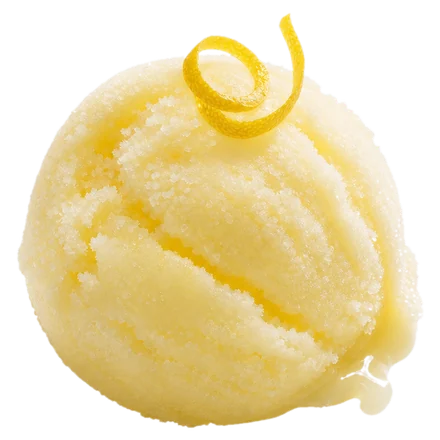
- Moulded to a peak
- Levelled with a dome
- Piled high in a tall pan
Questions about gelato and ice cream
The six that come up in every argument about this.
What is gelato, in one sentence?
A slowly churned frozen dairy dessert with a low air content and a warmer serving temperature than ice cream, which makes it denser and stronger tasting for the same recipe. Everything else about it follows from those three choices.
Is gelato healthier than ice cream?
Usually lower in fat, because it leans on milk rather than cream, but not lower in sugar, which does structural work and cannot simply be cut. It also feels richer than it is, since density reads as richness. Calling it healthier overstates a real but narrow difference.
Why does gelato melt so much faster?
It is served around minus 12 degrees rather than minus 18, so it starts closer to melting, and it holds far less air, so there is less insulating structure inside it. That combination is also why it is served with a flat spade rather than a ball scoop.
Does gelato always contain egg?
No. Egg-yolk bases are traditional in some families of flavour, notably the Argentine cremas and sambayon covered on the Argentinian ice cream page, but plenty of gelato is made with milk, cream, sugar and a stabiliser and no egg at all.
Is soft serve gelato or ice cream?
Neither, strictly. It is churned continuously and dispensed straight from the machine at a warm temperature with a very high air content, which is a third process. It is closest to ice cream in composition and closest to nothing in texture.
Which one is better?
The question does not survive contact with the products. A dense low-air base is better for an intense single flavour; a lighter high-fat base is better for something you want to eat a lot of slowly. A badly made example of either is worse than a well made example of the other.